Date

July 3, 2025

Topic

Resource

Share

Universal Design for Learning (UDL): Building Inclusive Digital Classrooms

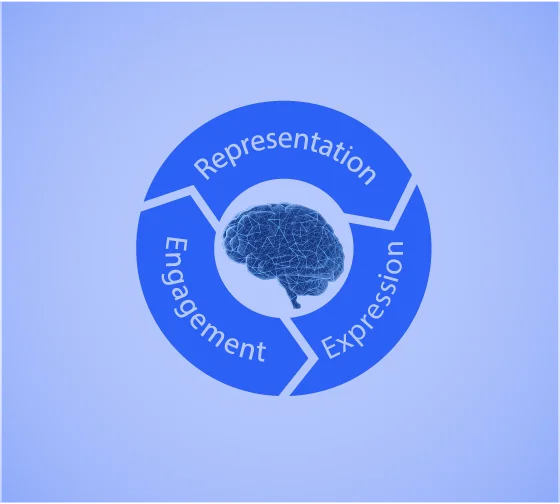
A diagram of a brain surrounding wih three arrows, labeled "Representation," "Engagement," and "Expression."

In an era where flexibility and equity are central to academic success, Universal Design for Learning (UDL) is fast becoming the backbone of inclusive digital education. Yet many higher ed institutions still view accessibility as a retroactive fix — when it should be a proactive design strategy.

UDL is not about adding more — it’s about designing smarter.

At Symbiosis, we work with institutions to embed UDL principles directly into course development, making learning accessible for all students from day one.

What is UDL — and Why Does It Matter in Higher Ed?

Universal Design for Learning, developed by CAST, is a research-based framework that guides the design of instructional goals, methods, materials, and assessments to meet the needs of diverse learners. 

UDL is built on three core principles: 

  • Multiple Means of Engagement – Motivating learners through choice, relevance, and value. 
  • Multiple Means of Representation – Presenting content in varied formats to accommodate different learning preferences and abilities. 
  • Multiple Means of Action & Expression – Giving learners different ways to demonstrate their knowledge. 

This is particularly crucial in higher ed, where neurodiversity, language barriers, physical disabilities, and mental health challenges all intersect in the classroom. 

According to the National Center for College Students with Disabilities, over 19% of U.S. undergraduates have a disability, yet many courses still rely on one-size-fits-all content delivery. 

UDL in the Digital Classroom: What It Looks Like

Here’s how UDL can be applied practically within your LMS and digital courses: 

Course Structure

  • Use clear, consistent navigation and logical module layouts. 
  • Include learning objectives at the start of each module to guide focus. 

 Content Delivery

  • Provide text, video, audio, and visual formats for lectures and readings. 
  • Use closed captions, descriptive alt text, and transcripts to support comprehension and access. 

Assessment & Participation

  • Offer flexible assessments — quizzes, presentations, reflections. 
  • Allow multiple submission formats: video, written, oral, or graphic.

Engagement Strategies 

  • Use interactive elements like discussion boards, simulations, or polls. 
  • Build in self-checks and low-stakes practice to reduce performance anxiety. 

From Compliance to Inclusion: UDL vs. Accessibility 

While accessibility ensures content can be used by people with disabilities, UDL ensures content works well for everyone. Think of it like curb cuts in sidewalks — originally designed for wheelchair users but now essential for parents with strollers or travelers with suitcases. 

UDL builds on accessibility by ensuring that barrier-free learning is baked in from the start — not retrofitted after a student requests accommodations. 

Institutional Benefits of UDL 

  • Improves retention and student success 
  • Reduces faculty workload in responding to accommodation requests 
  • Meets accessibility laws such as ADA, Section 508, and international equivalents 
  • Enhances equity, diversity, and inclusion (EDI) outcomes 

In fact, a 2022 study by EDUCAUSE found that UDL-aligned courses led to higher learner satisfaction and fewer dropouts — particularly among first-generation and underserved student populations. 

Getting Started with UDL at Your Institution

If you’re ready to move from theory to action, start by asking: 

  • Are our course templates UDL-informed? 
  • Do we offer training for faculty on inclusive design strategies? 
  • Are students given choices in how they access and express their learning? 
  • Do we collect and respond to student feedback on accessibility and engagement? 

Symbiosis: Your Partner in Inclusive Course Design

At Symbiosis, we help institutions integrate UDL into the heart of instructional design. From course blueprints to interactive content, our design process centers student diversity — supporting faculty creativity, institutional goals, and learner success.

Unlock the Future of Learning 

Explore cutting-edge strategies and expert insights to transform digital education through accessibility, AI, and personalized learning experiences. 
An accessibility icon over a background of various international flags.

Blog

Digital Accessibility Compliance: Navigating Global Standards and Regulations

A diagram of a brain surrounding wih three arrows, labeled "Representation," "Engagement," and "Expression."

Blog

Universal Design for Learning (UDL): Building Inclusive Digital Classrooms

A student working on a laptop with a floating futuristic AI robot and code on the screen.

Blog

AI-Driven Personalized Learning: Enhancing Accessibility and Student Success